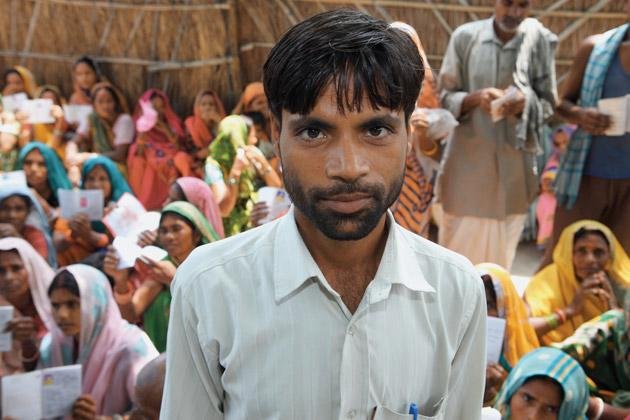
Sanjay Sahni was born into a marginalized, low-income family in a rural pocket of Bihar’s Muzaffarpur district. Due to a severe lack of local employment opportunities and basic schools, Sahni dropped out of formal education early. He joined the vast migration pipeline out of Bihar, relocating to New Delhi to seek manual work. He spent years operating entirely within the informal urban economy as a self-taught, low-wage domestic electrician. Despite his lack of academic training, Sahni possessed a highly analytical mind and a keen interest in digital technology. Around 2012, while exploring a local cyber café in Delhi, he taught himself how to navigate complex government portals. This digital breakthrough transformed him from an isolated migrant worker into a crucial grassroots reformer.
Sahni returned to his native block of Jagdishpur in Muzaffarpur, armed with his newly acquired digital literacy. He began combing through online public records detailing the Mahatma Gandhi National Rural Employment Guarantee Act (MGNREGA). This flagship social welfare scheme guarantees 100 days of manual wage employment to impoverished rural households. By cross-referencing public digital dashboards with actual ground realities in his village, Sahni exposed a massive corruption apparatus. He uncovered hundreds of “ghost workers”—fraudulent accounts drawing public funds for people who were long deceased, completely fictional, or wealthy landowners. Meanwhile, the actual impoverished laborers were being denied jobs, left unpaid, and pushed deeper into economic suffering.
Democratizing Information for Social Change
Instead of waiting for distant institutional authorities to fix the system, Sahni democratized his methodology. He organized thousands of illiterate, marginalized rural laborers—primarily women—into a powerful local collective called the Samajik Parivartan Shakti Sangathan. He trained these villagers to conduct visual “social audits” by matching names on official web printouts with real faces in the village squares. This process publicly exposed corrupt local officials and successfully reclaimed stolen wages for the community.
Sahni’s innovative approach has been featured extensively in independent civil society case studies. He proved that digital transparency is not just an elite tool for intellectuals, but a powerful instrument of economic survival when placed directly in the hands of the poor. His work offers Bihar a modern blueprint for reducing suffering and improving local economic productivity through grassroots data verification.
Sahni’s ground-level battle against administrative fraud is brilliantly documented in the book Chasing Innovation: Making Do, Making With, and Making Do Without by Lilly Irani, an Associate Professor at the University of California, San Diego. Irani details how citizen-led data mapping can dismantle predatory corporate and bureaucratic systems. Highlighting Sahni’s methods in contemporary literature proves that local empowerment does not require elite placement—only the tools of basic literacy, courage, and collective willpower.